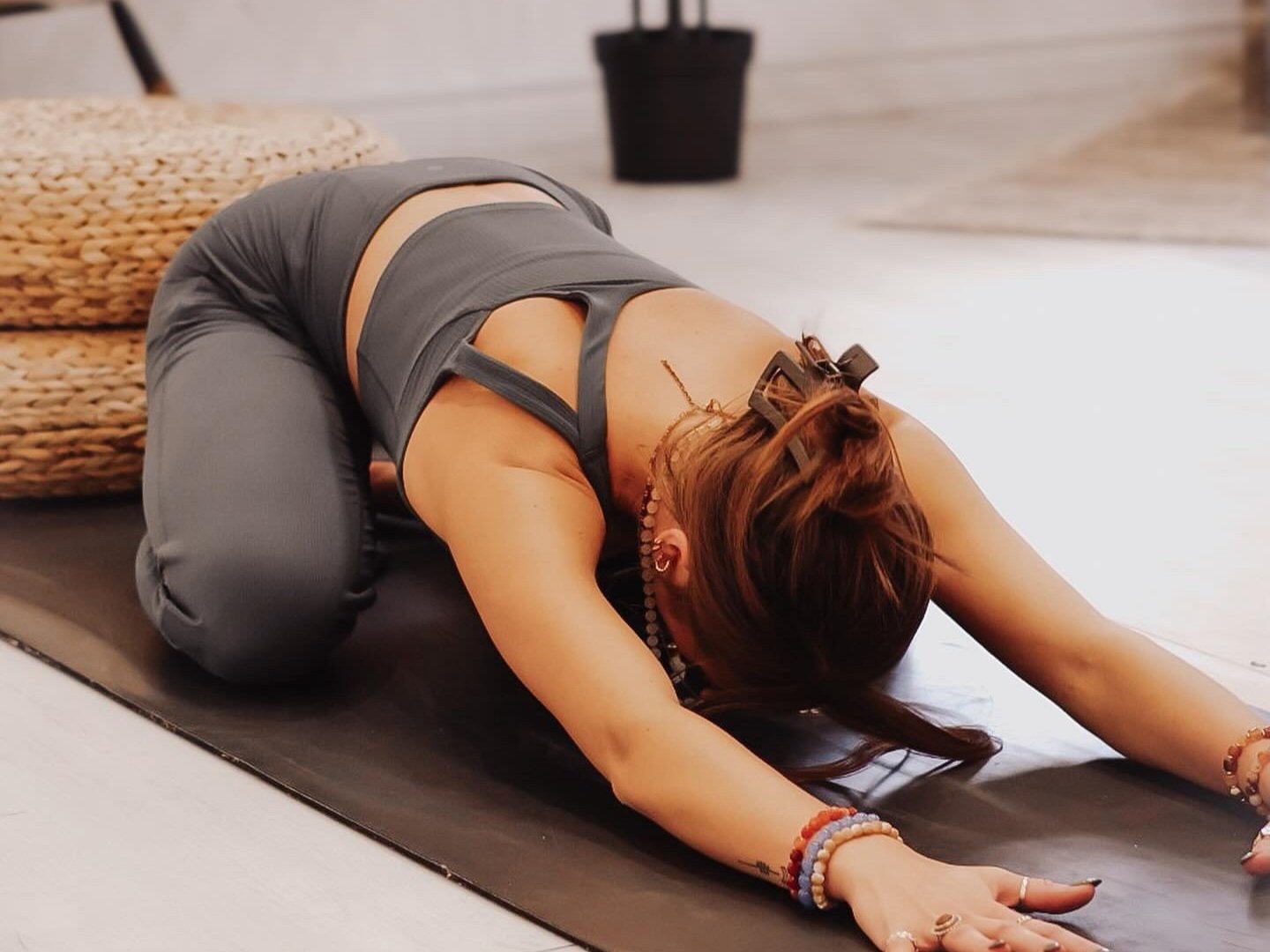
Most people come to their first breathwork class expecting something simple. Breathing in, breathing out — how different can it be? Within about ten minutes, they usually understand that what's happening in the room is something they have never experienced before. Some people cry. Some feel warmth moving through their body. Some feel profoundly, unexpectedly still. Most of them book the following Monday before they've even left the studio.
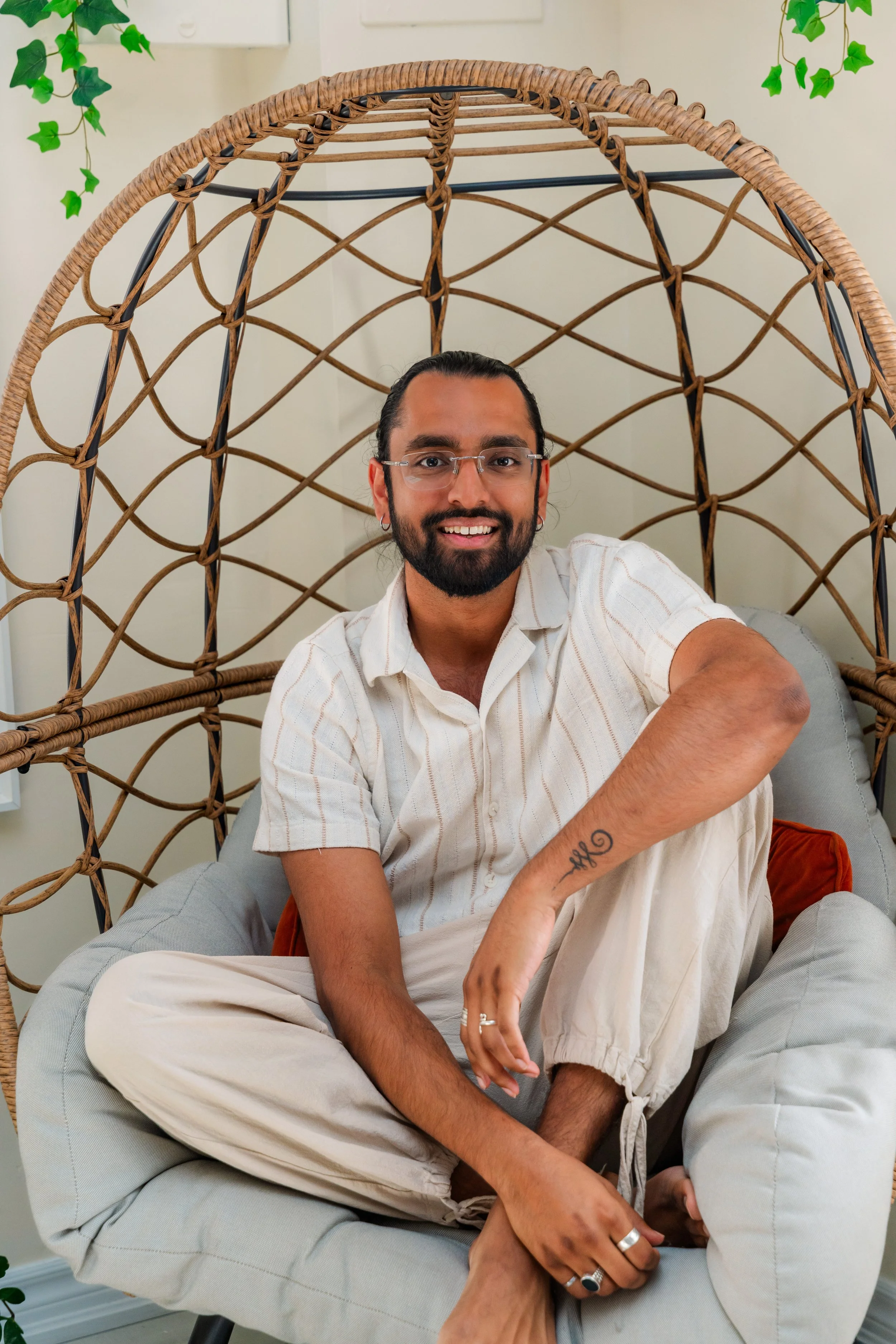
My name is Aman, and I've been exploring meditative and breathwork techniques for over fifteen years. I teach our Rest & Regulate Somatic Breathwork class every Monday at The Lotus Loft in Burlington. This post is my attempt to explain — as clearly and honestly as I can — what somatic breathwork actually is, what happens to your body during a session, and why I believe it's one of the most powerful tools available for anyone whose nervous system is running on empty.
What does "somatic" actually mean?
The word somatic comes from the Greek word for body. In the context of breathwork and therapy, somatic refers to the understanding that the body — not just the mind — holds our experiences, our stress, our emotions, and our histories. Somatic practices work directly with the body to create change, rather than working through thought or analysis alone.
This is the key distinction between somatic breathwork and a lot of what we think of as relaxation or meditation. You're not trying to think your way into a calmer state. You're breathing your way into one — using the breath as a direct lever on your nervous system, your physiology, and the places in your body where tension and emotion are stored.
The science: what your breath does to your nervous system
Your autonomic nervous system — the part of your nervous system that governs heart rate, digestion, immune response, and your stress reactions — is mostly involuntary. You can't consciously tell your heart to slow down or your digestion to improve. But there is one function of the autonomic nervous system that you can consciously control: your breath.
This is not a small thing. It means that breath is the only direct, voluntary bridge between your conscious mind and your nervous system. When you change your breathing pattern, you change your physiological state. Slow, deep breathing activates the parasympathetic nervous system — the rest and restore mode. Extended exhales stimulate the vagus nerve, which runs from your brainstem through your heart, lungs, and digestive system and is the primary conductor of parasympathetic activity in the body.
Somatic breathwork uses specific patterns of breathing — informed by fifteen-plus years of my own study and practice — to guide your nervous system deliberately into states of regulation, release, and deep rest. It's not magic. It's physiology.
Breath is the only direct, voluntary bridge between your conscious mind and your nervous system. When you change your breathing, you change your state.
What happens during a Rest & Regulate session
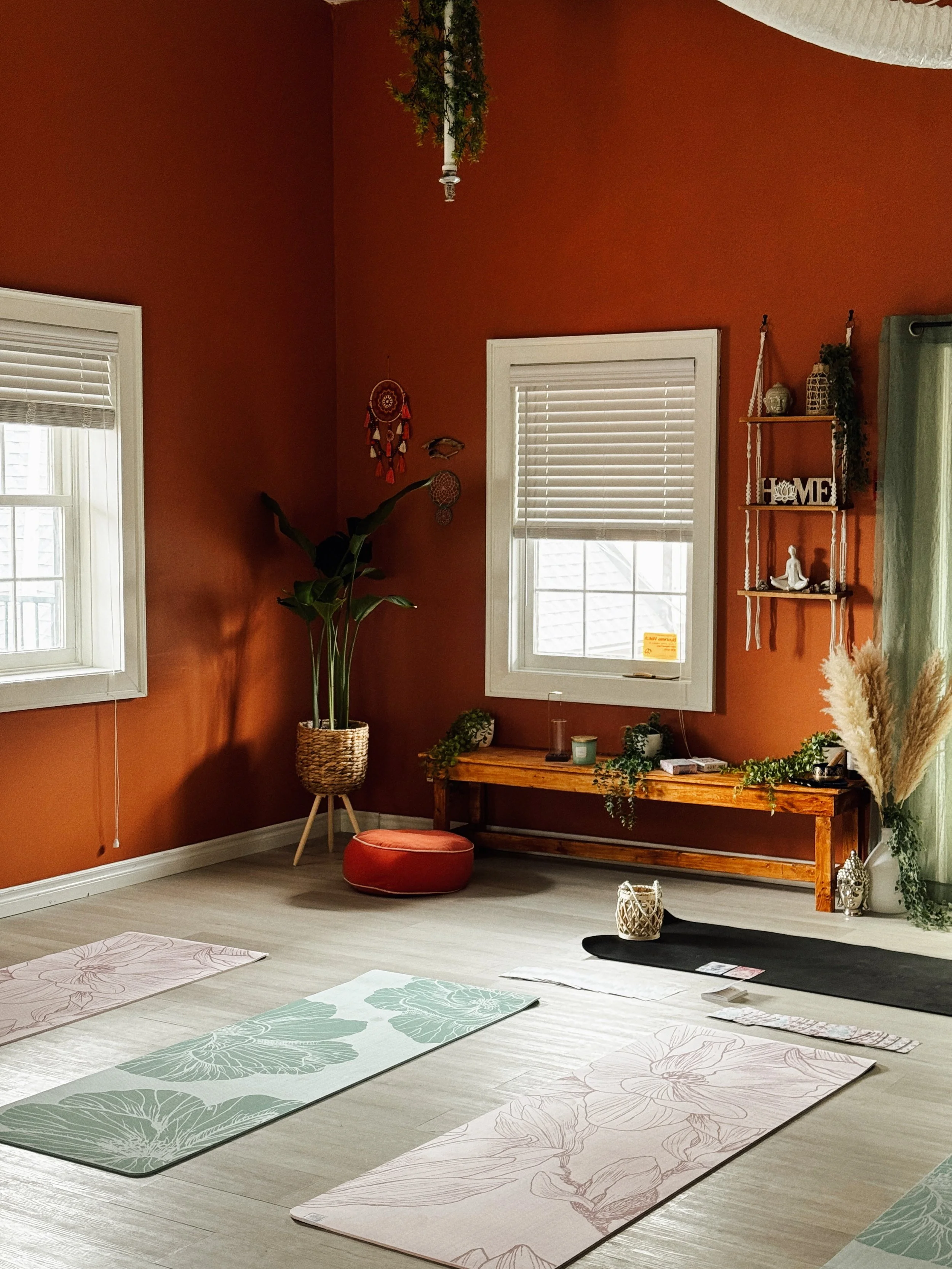
Our Monday evening class runs for approximately 75 minutes. You'll spend the session lying down on your mat, supported by blankets and bolsters if you'd like them. The room is quiet, the lighting is low, and the pace is intentionally slow.
We begin with a grounding exercise — bringing your awareness into your body, noticing what's present, and beginning to soften the grip of whatever the day has brought. From there, I guide you through the breathwork sequence itself: a series of conscious, connected breathing patterns that shift your physiological state over the course of the session.
As the session progresses, many people notice physical sensations — tingling in the hands or face, warmth in the chest, a feeling of heaviness or lightness, or waves of emotion moving through the body. These are normal, well-documented responses to breathwork and they're not something to be alarmed by. They're signs that the practice is working — that your body is releasing what it's been holding.
The final portion of the class is extended stillness. After the active breathwork, you rest in a guided Yoga Nidra-style state — conscious but deeply relaxed, between waking and sleeping. This is where integration happens. This is where the body absorbs the session.
Why Monday specifically
I teach on Mondays for a reason. Monday carries a particular weight for most people — the reopening of the week, the resumption of demands, the accumulation of what didn't get resolved over the weekend. I want to offer people a way to begin their week from a regulated, grounded state rather than a reactive one. If you can reset your nervous system on Monday evening, the rest of the week tends to feel different. Not easier necessarily — but more navigable.
Who somatic breathwork in Burlington is for
In fifteen years of practice and teaching, I've seen breathwork help people with anxiety, chronic stress, grief, sleep difficulties, emotional numbness, and the kind of bone-deep exhaustion that a holiday doesn't seem to fix. It's not a replacement for therapy or medical care. But it's a practice that works at a level that talk alone often can't reach — the level of the body, the breath, and the nervous system.
You don't need any prior experience with breathwork or yoga to come to the Monday class. You don't need to be in good health, in good shape, or in a good headspace. You need a mat, comfortable clothes, and a willingness to breathe. I'll take care of everything else.
Join Aman this Monday
Rest & Regulate Somatic Breathwork runs every Monday at The Lotus Loft in Burlington. New students can access all classes — including this one — for two weeks with our intro offer.
Book Your SpotA note on what to expect emotionally
I want to be honest with you about this: somatic breathwork can bring emotions to the surface. Not in a destabilising or overwhelming way — the practice is structured specifically to support safe release. But if you've been running on adrenaline, or holding grief, or pushing feelings down to keep functioning, the breathwork may create space for some of that to move.
This is a good thing, even when it doesn't feel like one in the moment. The body knows how to process what the mind can't always access. Part of my job is to hold the space for that processing to happen safely. People sometimes apologise to me afterward for getting emotional. I always tell them the same thing: there is nothing to apologise for. That was the practice working.
Come breathe with us
If you've been curious about breathwork in Burlington and have been waiting for the right moment — this is it. There is no right moment. There is only the breath you're taking right now, and the one you could choose to take more consciously on Monday evening.
I hope to see you on the mat soon.